FOREST PAVILIONS
THE HIDDEN SCRIPT: Architecture as Autobiography

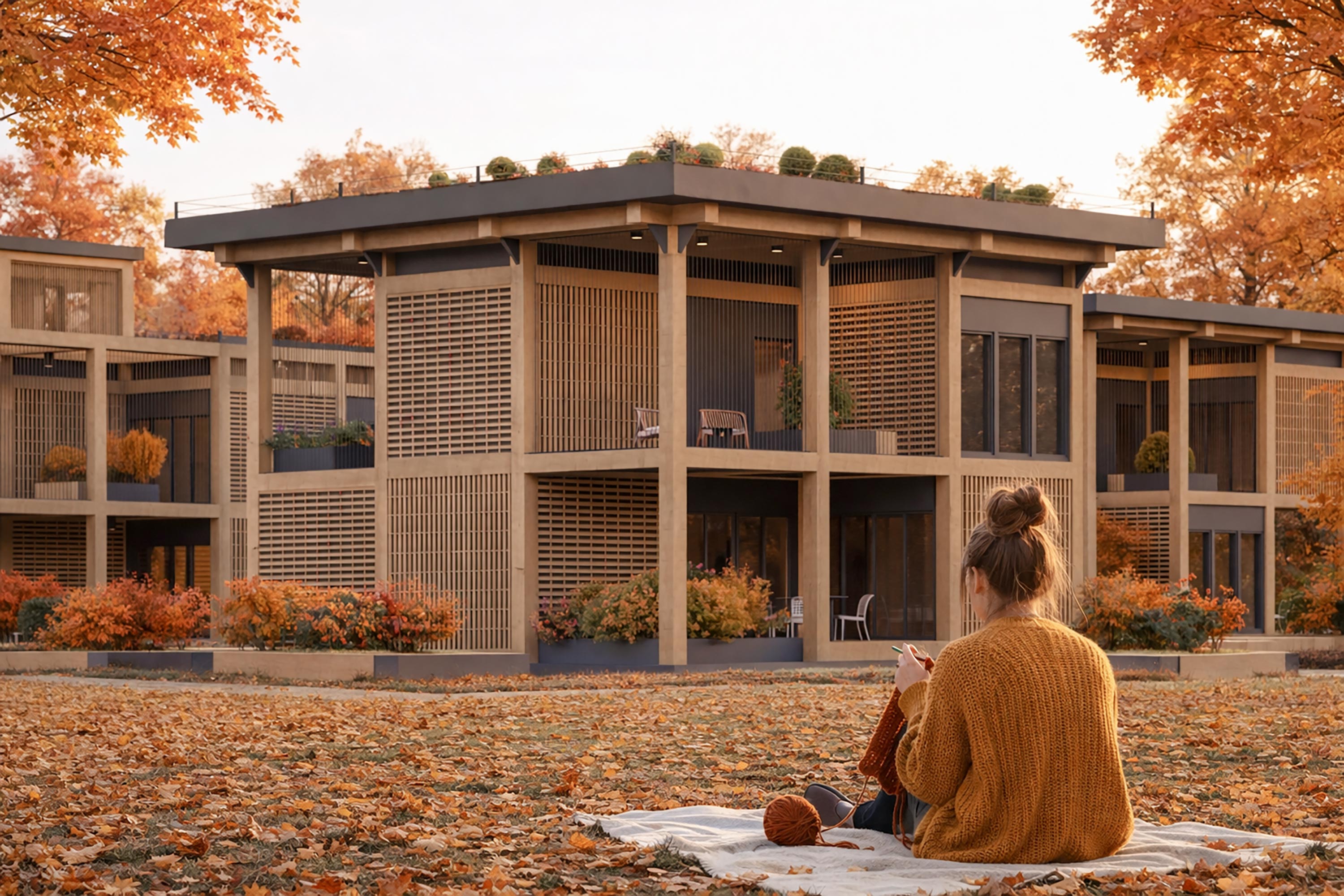
The Forest Pavilions project does not view architecture as a mere static object, but as a living language and a psychological imprint. Just as a limited number of letters can be used to create an unlimited number of words and sentences, our system uses a reduced architectural vocabulary to compose an infinite number of spatial combinations.
The idea is ultimately simple, yet deeply philosophical: a house can become an architectural autobiography. It is composed of modular panels, each panel representing a symbolic image, a complex principle, and a phase of your personal development. By combining these panels into pairs and smaller wholes (architectural words), and then into a final form (architectural syntax), the house is not simply assembled as a set of walls. It becomes a materialized life story — a spatial identity translated into form.
The facade elements here are not mere decoration — they are a lexicon, while the structural slats become graphemes (the smallest units of meaning) of an architectural sentence.
This symbolic language is held within the discipline of the 3×3 meter modular grid, allowing personal variation without losing architectural coherence.
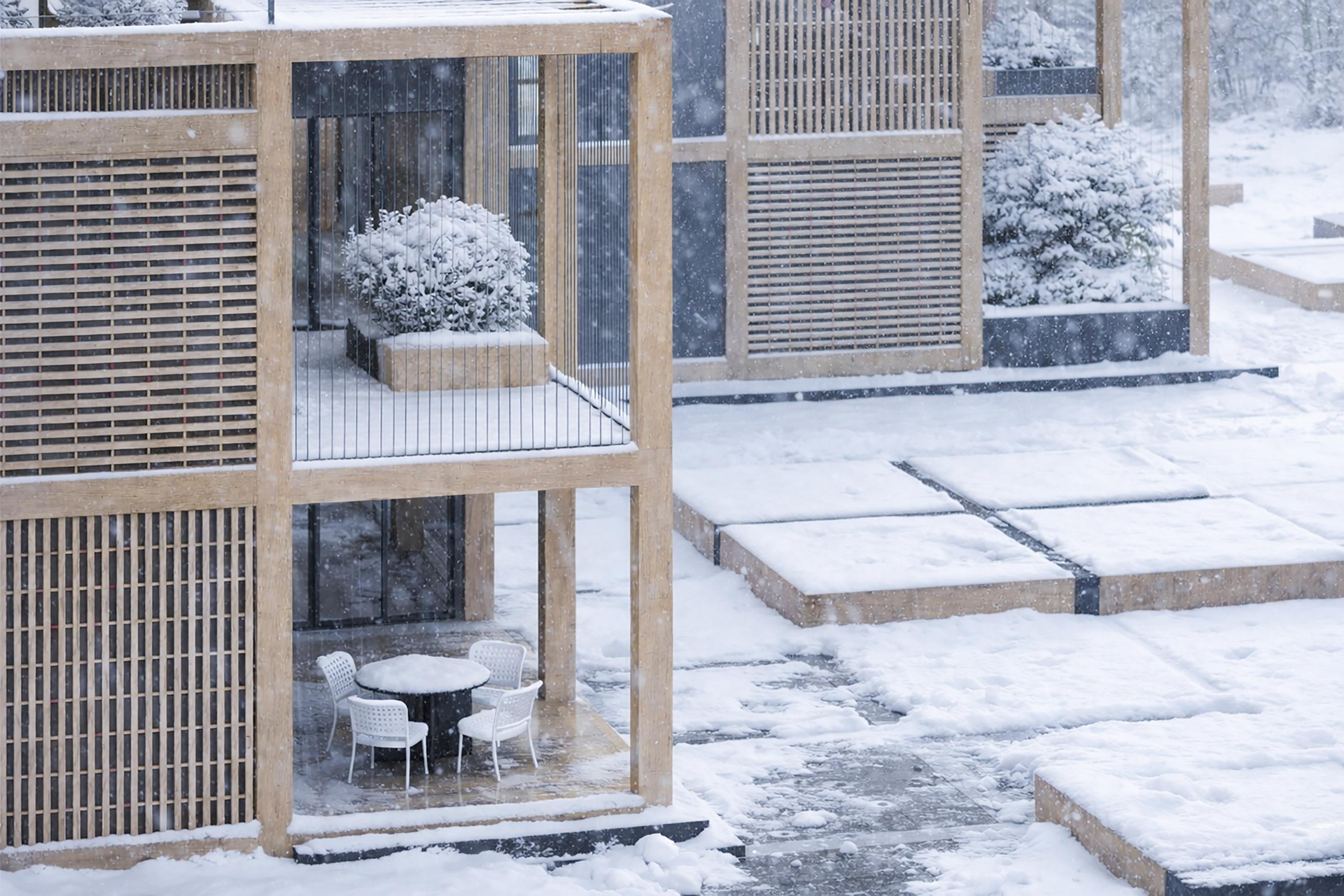
The origin of form is not aesthetic. It is logical.
The Phenomenon of Wholeness: The Reconciliation of Opposites
Truth cannot exist without falsehood, light without darkness, or fullness without emptiness. Every phenomenon always stands in relation to its opposite. In order to understand the world and its phenomena fully, we must perceive three elements: two opposites and the relation that unites them.
In psychological terms, the house represents an image of our psyche and our innate need to become whole. The architecture of Forest Pavilions is conceived precisely to reconcile these opposites and create balance.
This reconciliation appears architecturally through the relation between visible and hidden structure, modular repetition and individual variation, interior and exterior expression.
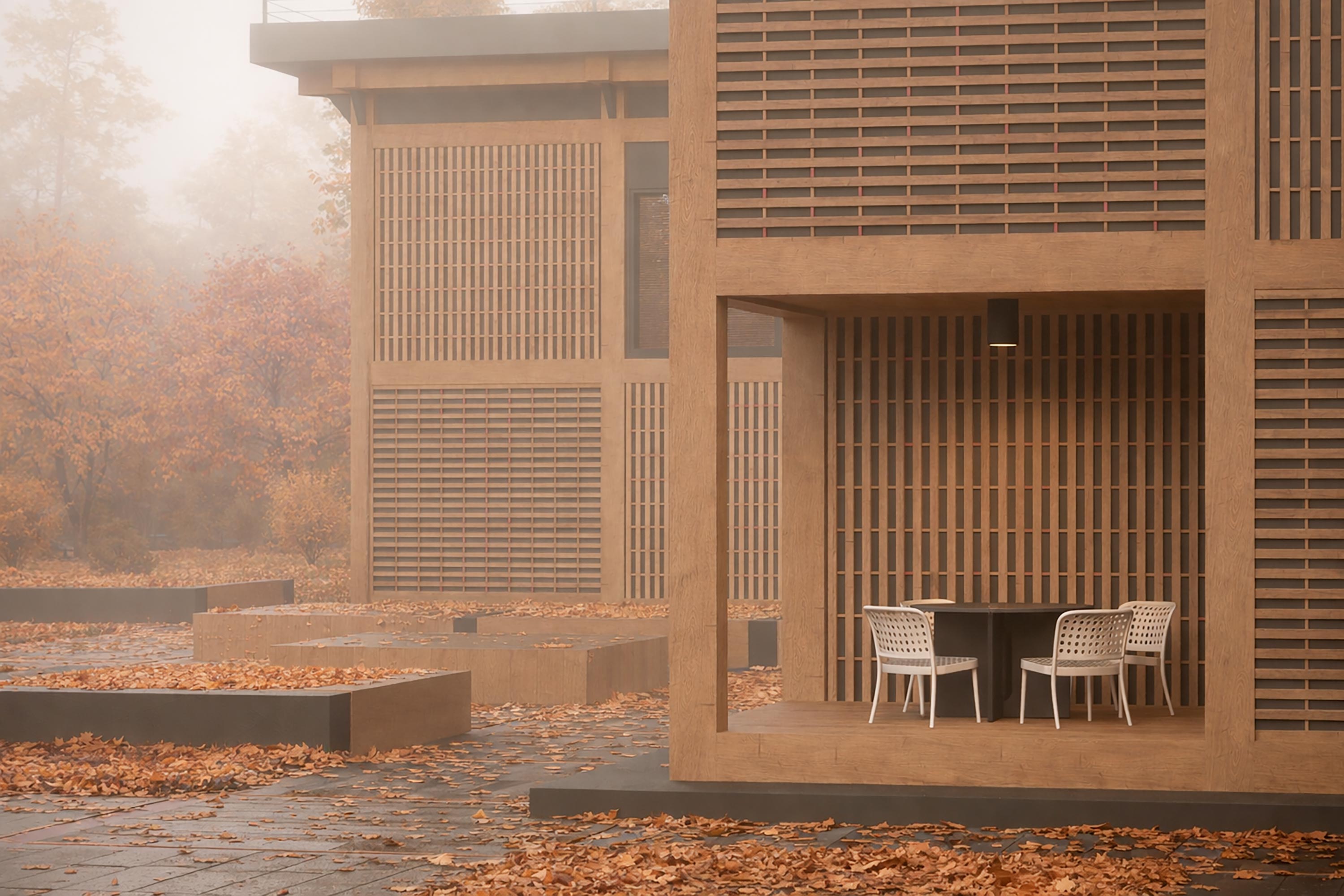
Architecture as a mirror of natural order.
The Tree as the Ultimate Symbol of Balance
We see this unity of opposites in nature most clearly through the form of the tree. The tree perfectly illustrates the three basic levels of our existence:
- The Crown (Outward Action): This is the visible, open side turned toward the world and the sun. It represents creation, action, and everything we offer to our surroundings.
- The Root (Inner Gathering): A hidden, dark structure. It symbolizes our inner world, withdrawal, stabilization, and the processing of everything we go through.
- The Trunk (Connection and Synthesis): The structural axis and archetypal “bridge.” The trunk connects our inner and outer worlds, allowing the tree to live as a unified whole.
This same structure applies to the human being: our consciousness connects the infinite outer world with our rich inner world. The ego is the relation that binds them together. The tree visually shows us what proper form is, because the crown is almost always more branched than the root. What is hidden provides stability, while what is visible ensures the continuation of life. Meaning is always found in the balance of this form.
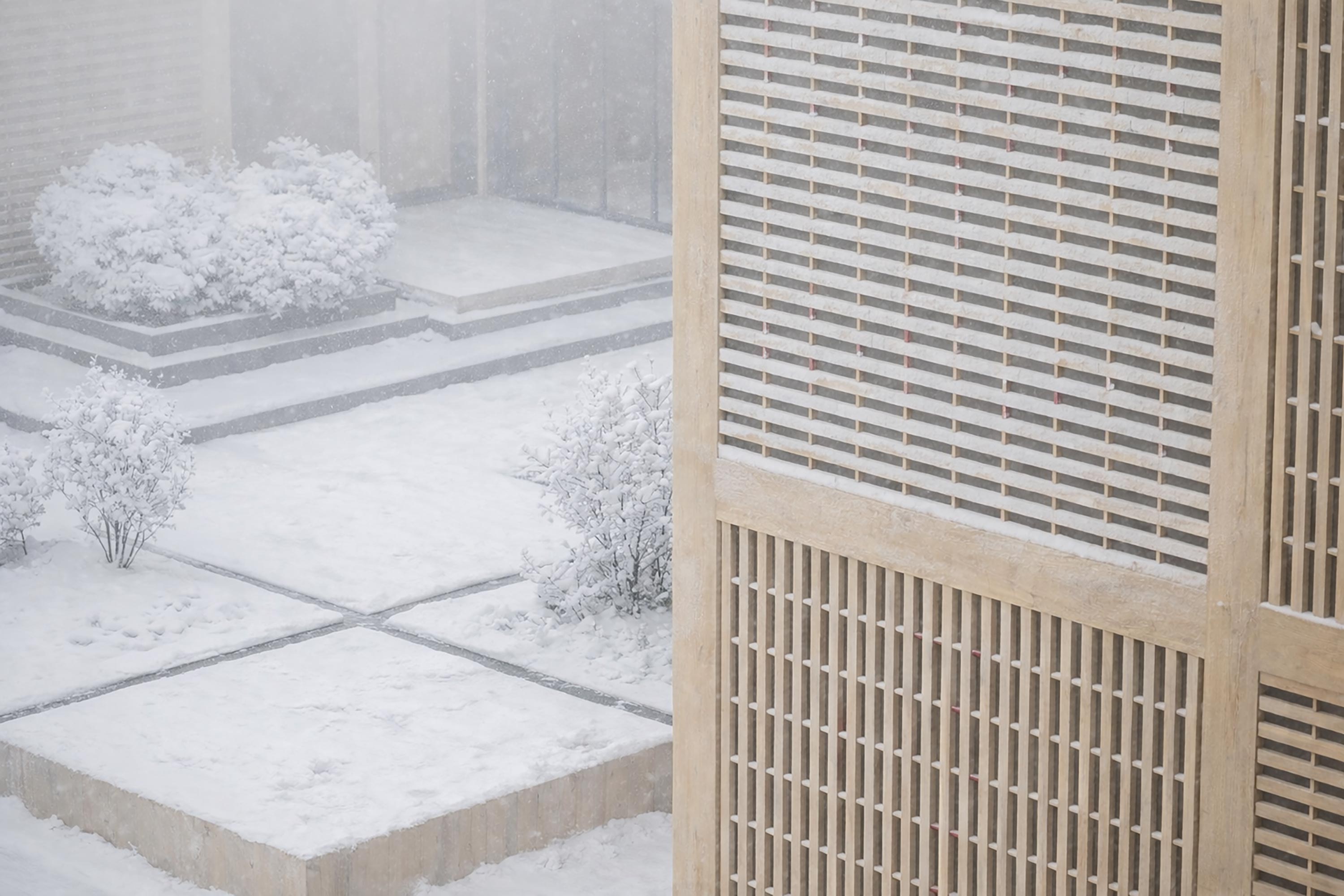
The meaning of meaning is not in the meaning, but in the balance of form.
Facade Panels: Six Morphologies of Growth
The wooden facade panels of Forest Pavilions are not designed merely as ornament. The arrangement of the red stabilizers on them forms hidden images of growing trees, like ancient seals. All panels, in fact, represent different aspects and stages of life. There are six fundamental phases of growth that we pass through:
- Growth from Imbalance: Adaptation and growth despite asymmetrical conditions and pressures.
- Bidirectional System: A strong expansion of presence and openness toward the world on both sides.
- Complete Symmetry: The most harmonious phase and a fully stabilized center of personality.
- Stepwise Growth: A conscious, analytical, and phased structuring of experience.
- Vertical Sail: An ascetic, elongated form striving toward essence and spiritual verticality.
- Dual Entity: The development of two lines from the same source, the unification of duality into wholeness.
Throughout our existence, we all live through all of these aspects. We do so, however, in different sequences, at different periods of life, and some panels and phases appear in us more frequently than others. Because of this diversity of lived experience, no two houses are the same.
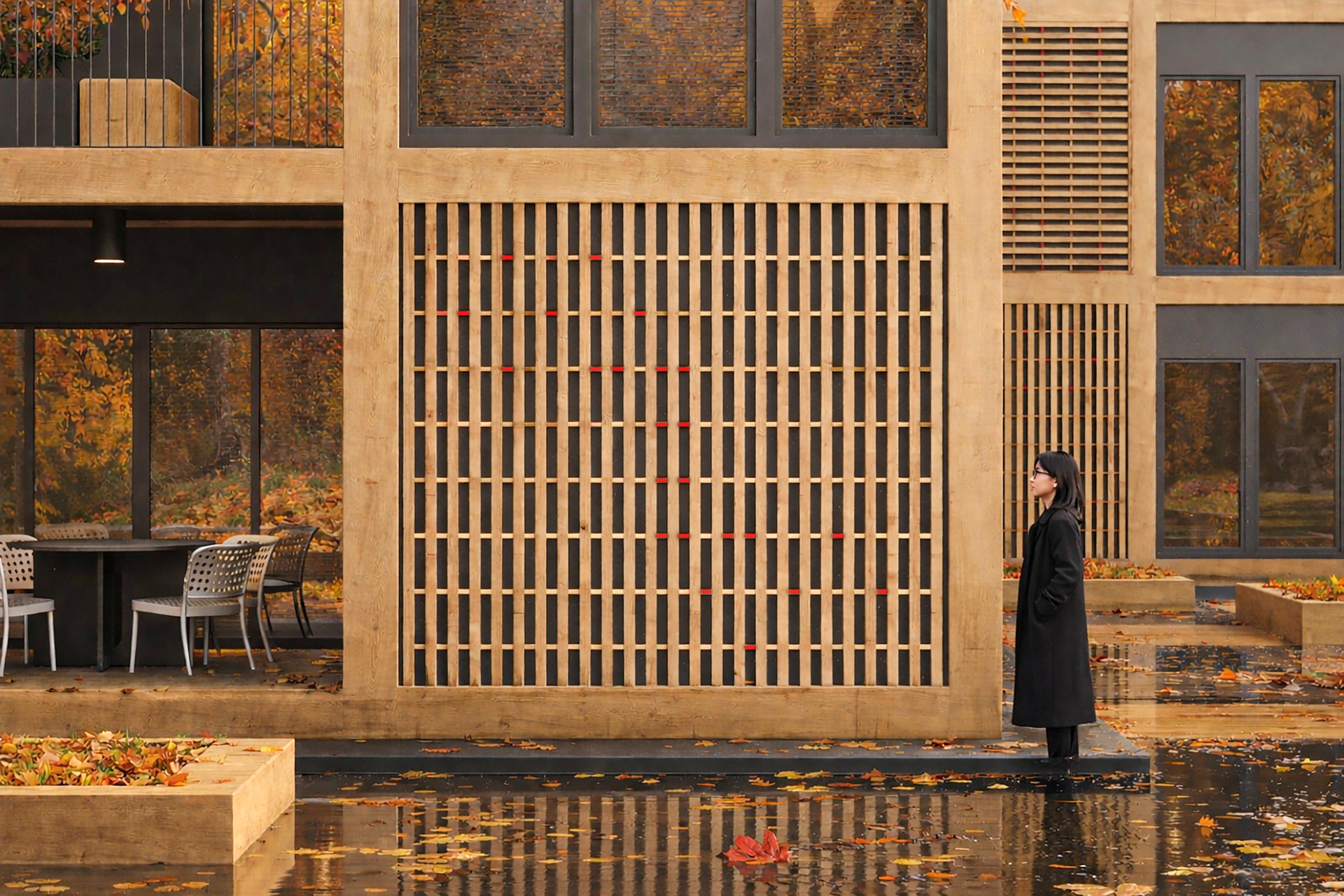
Every panel is a code. Every house is a system.
THE PROTOTYPES
HOUSE 01 — RADIX
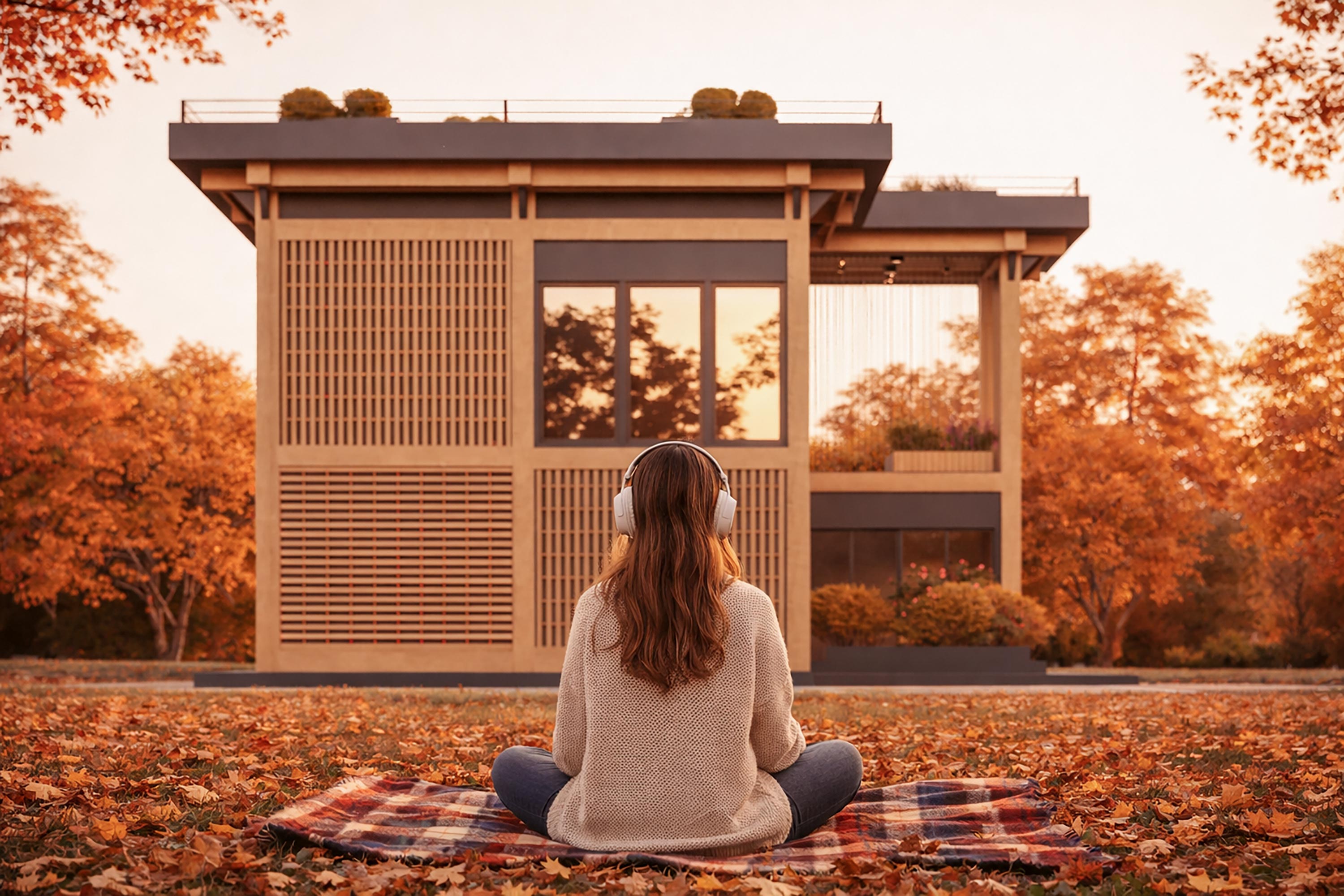
HOUSE 02 — ARBORIUM
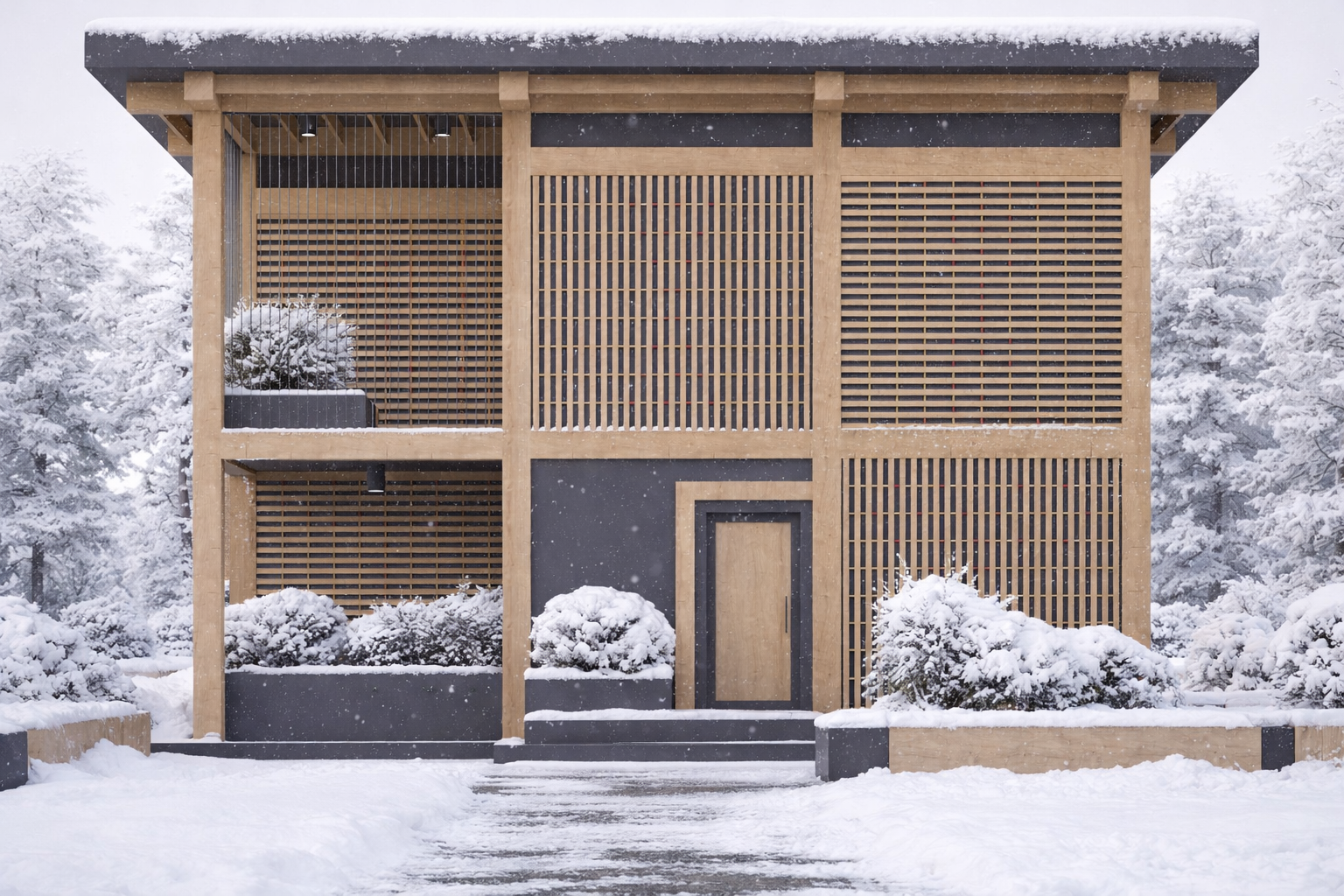
HOUSE 03 — INTEGRUM
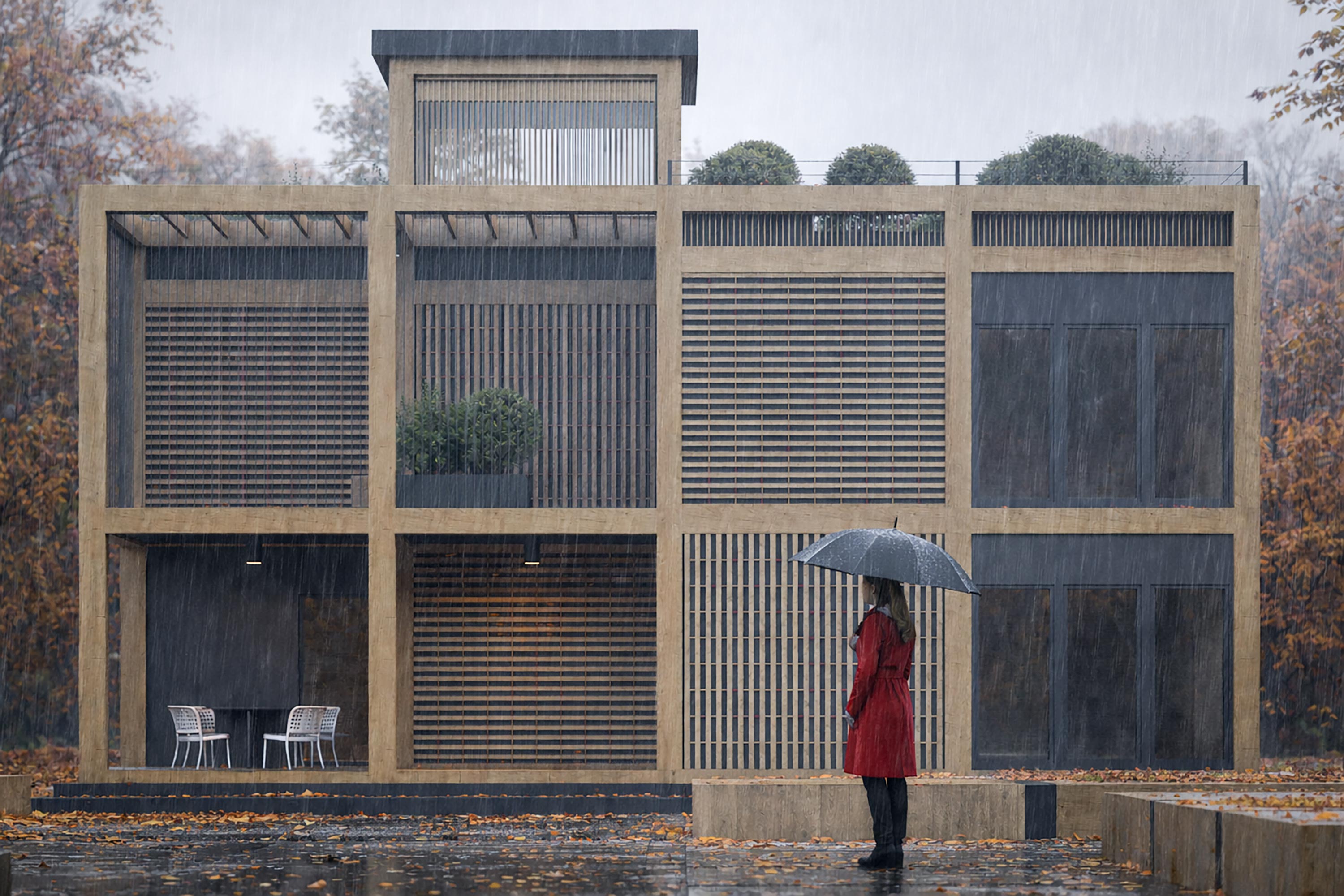
Architecture as Autobiography
Through this approach, the house ceases to be a static object and becomes a living organism. Its spatial growth follows your inner development, transforming the building itself into your personal architectural biography.
Each panel on the facade represents a hidden code, a testimony to a period of your adaptation, expansion, or spiritual stabilization. Although each of these segments carries value in itself, the whole always becomes incomparably greater and more powerful than the mere sum of its parts.
At the end of the process, when the last panel is placed, your house becomes a complete, integrated system — an active symbol. It is no longer merely a place to live, but a materialized imprint in time.
CLOSING STATEMENT
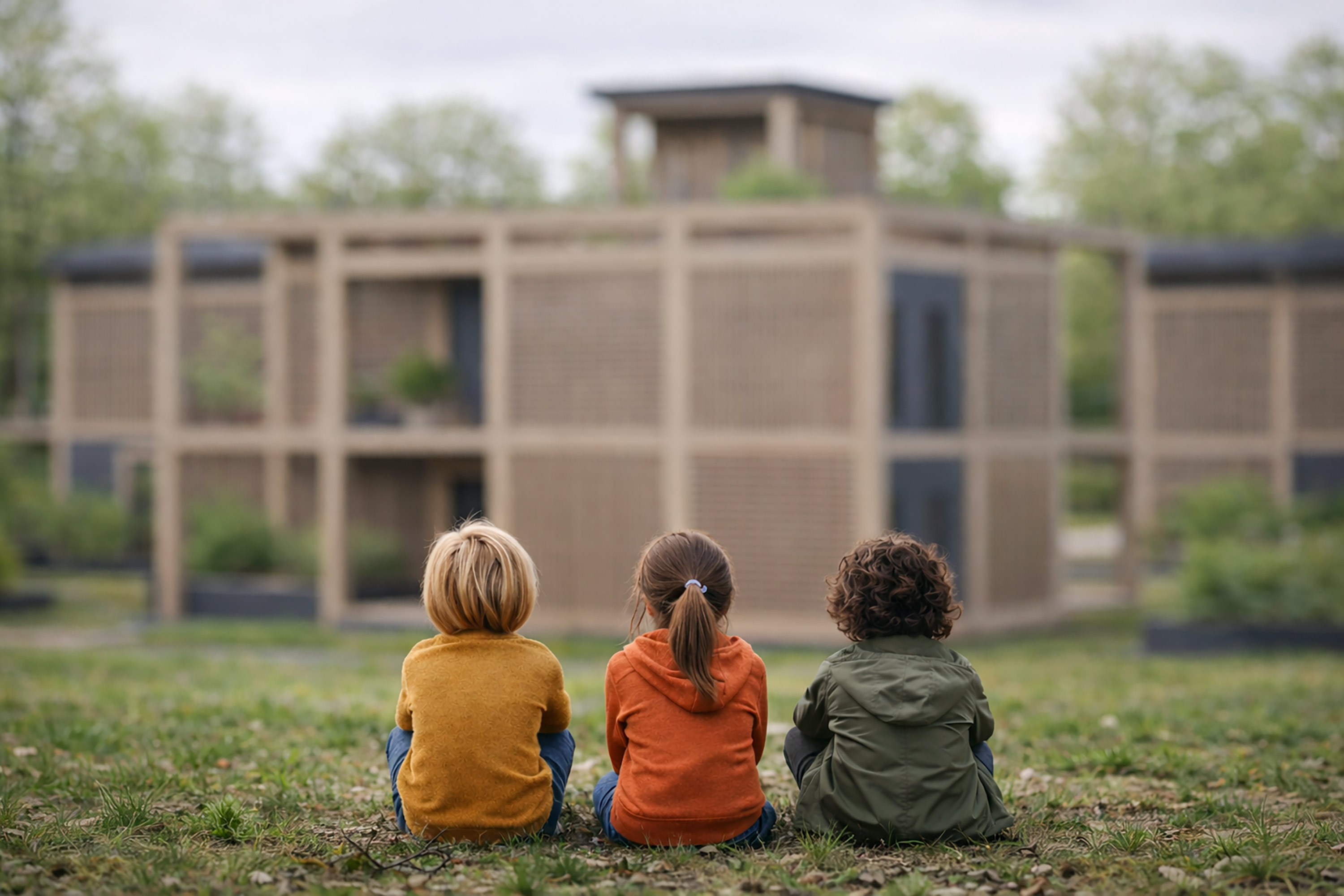
Forest Pavilions is not a style. It is an architectural grammar.