
FOREST PAVILIONS – Architectural System
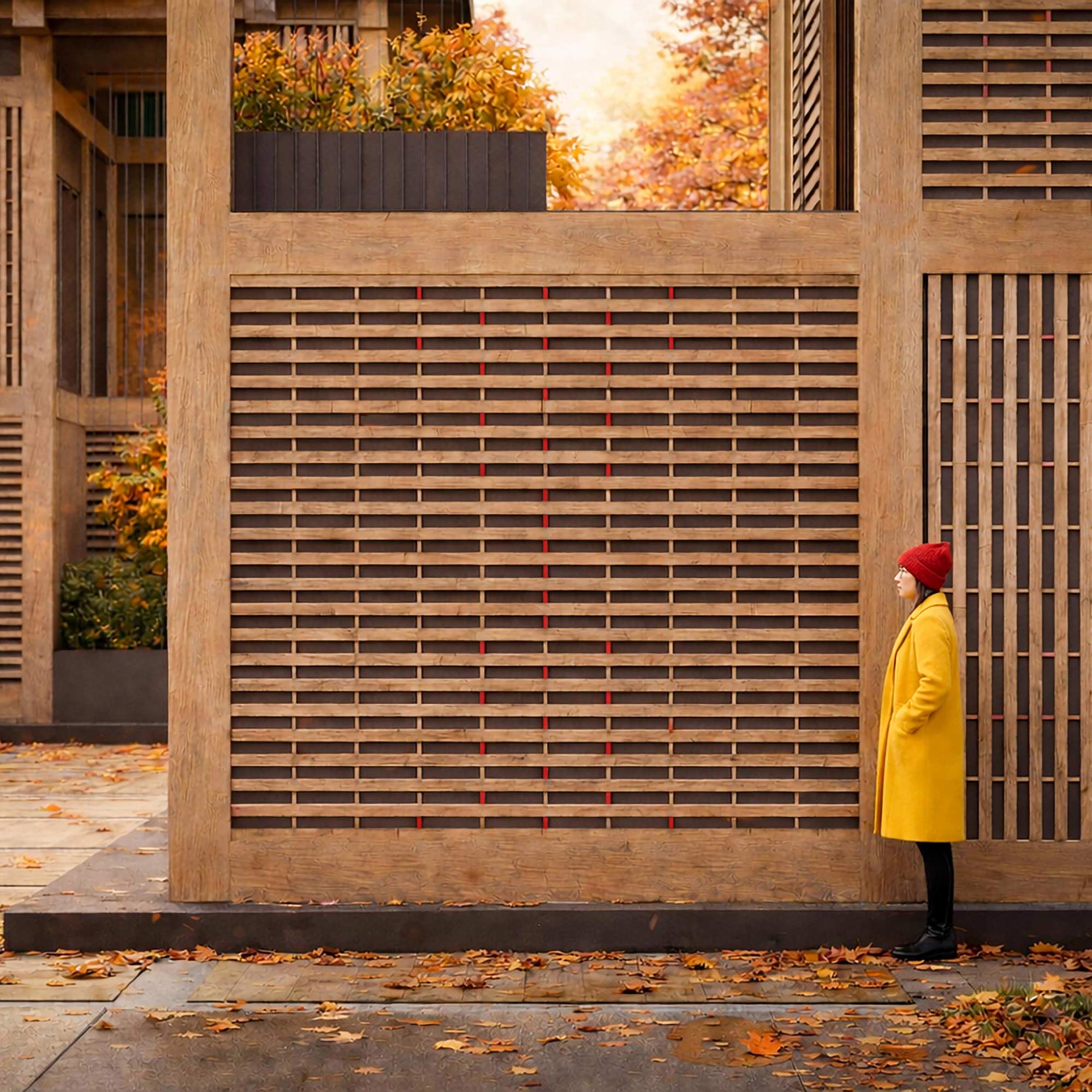
A symbolic villa design language based on modular order, timber logic, and the idea of the house as a living image of human development.

FOREST PAVILIONS — Architectural System
Forest Pavilions is not a single house model.
It is an architectural language — a modular, symbolic, and spatial system developed for villas, retreats, estates, boutique developments, and premium residential environments.
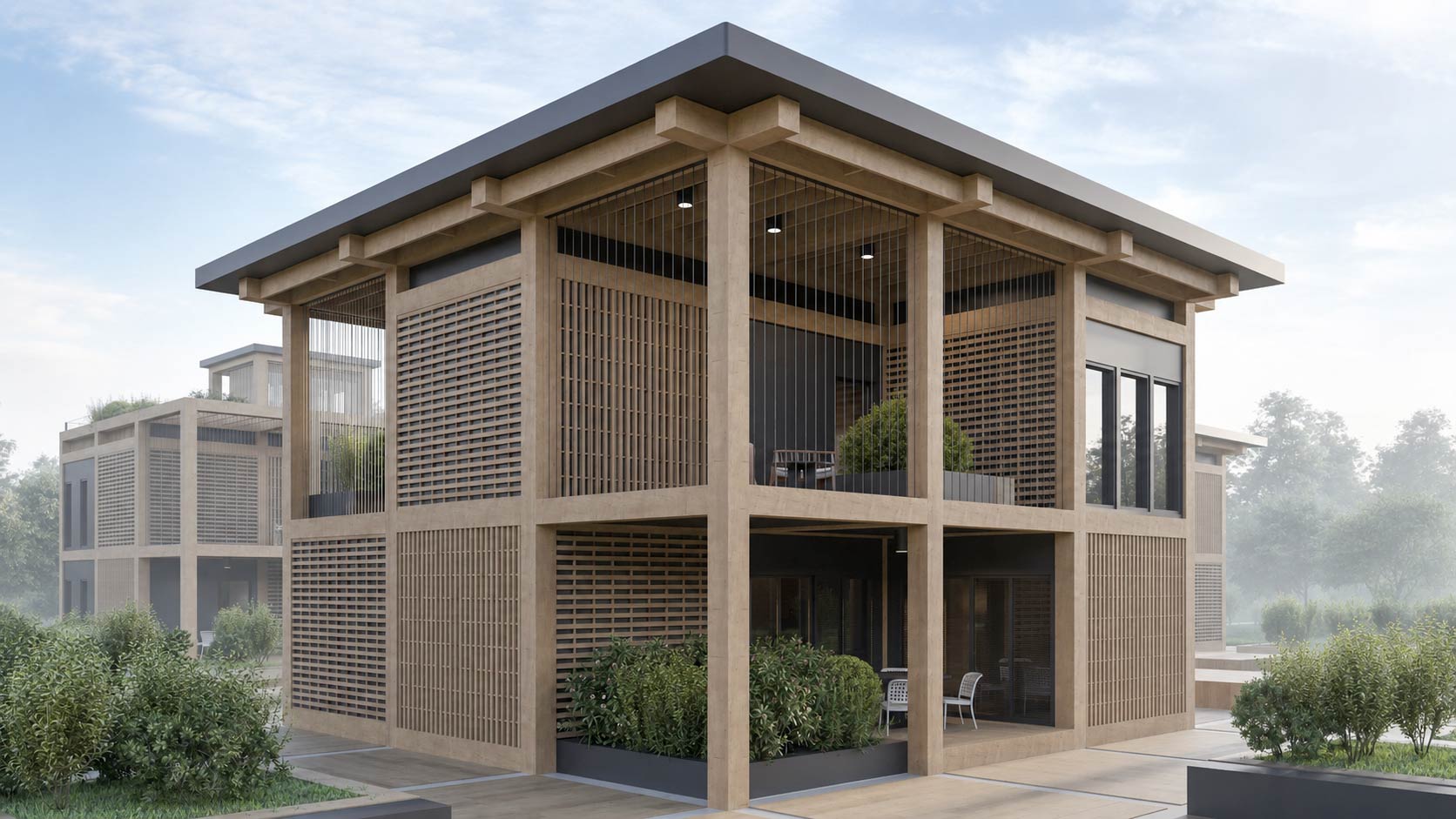
The project begins with a simple 3×3 meter grid. But the purpose of the grid is not only efficiency. It is a grammar. Like letters forming words, or zeros and ones generating digital worlds, a limited number of architectural elements becomes capable of producing an unlimited number of spatial variations.
In this sense, Forest Pavilions is not merely a modular housing proposal.
It is a system of form, meaning, and growth.

House as Principle
A house is never only shelter.
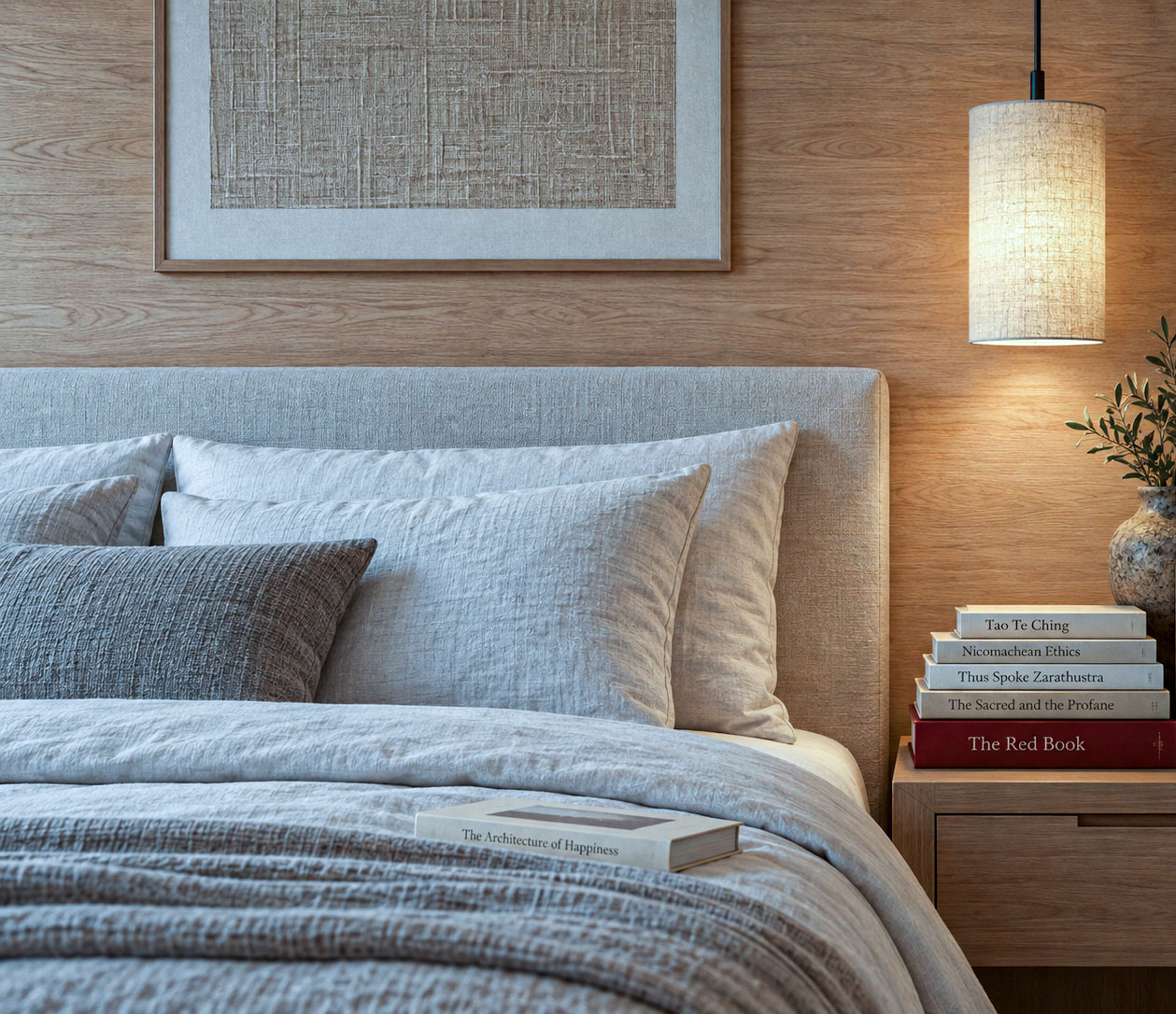
At its deepest level, the house is one of the oldest images of the human being: a place where body, memory, identity, ritual, and aspiration become spatial. In dreams, myths, and symbolic thought, the house often appears as an image of the psyche — not as persona, not as social mask, but as a deeper structure of the self.
Forest Pavilions treats the house as an exponent of personality.
Not personality as style alone.
Not personality as decoration.
But personality as an inner order: the relation between what is visible and what is hidden, what is private and what is shared, what is rooted and what is expressed.
The house becomes a reminder that architecture can still carry ethical ideas: development, discipline, balance, individuation, and the slow formation of the self.
Architecture as an Ideal
Contemporary architecture often reduces the house to function, investment, lifestyle, or image.
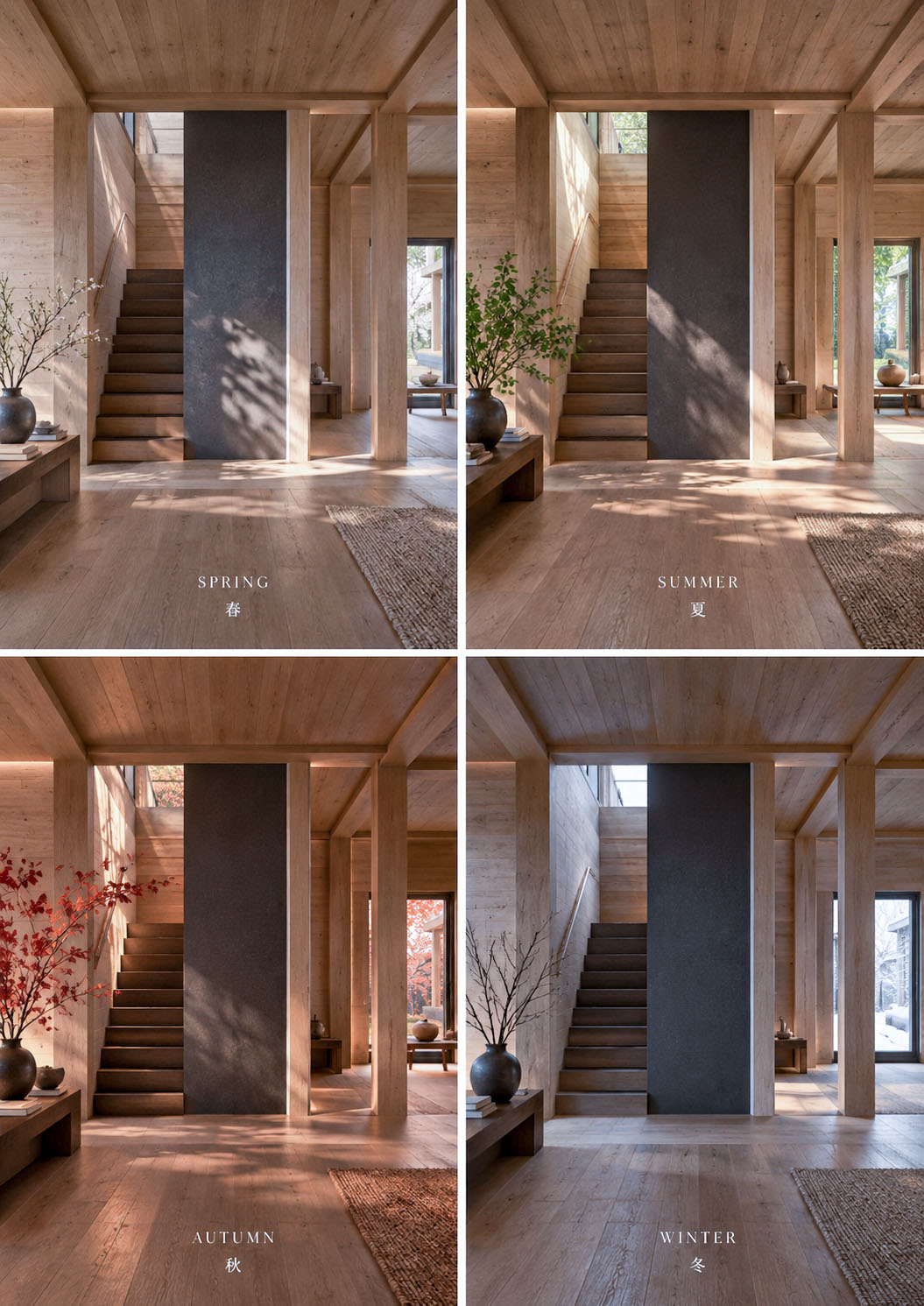
Forest Pavilions proposes another possibility: the house as an artwork that can serve as an ideal.
Not an ideal in the sense of luxury alone, but an ideal in the older sense — a form toward which life can orient itself.
A house can remind its inhabitant how to live.
It can establish rhythm.
It can organize attention.
It can create a daily encounter with proportion, order, nature, material honesty, and symbolic depth.
Here, design is not understood as the production of objects, but as a form of knowledge. And knowledge is not complete until it changes behavior.
A meaningful house does not merely represent the user.
It educates the user.
It becomes a spatial discipline.
Timber and Duality
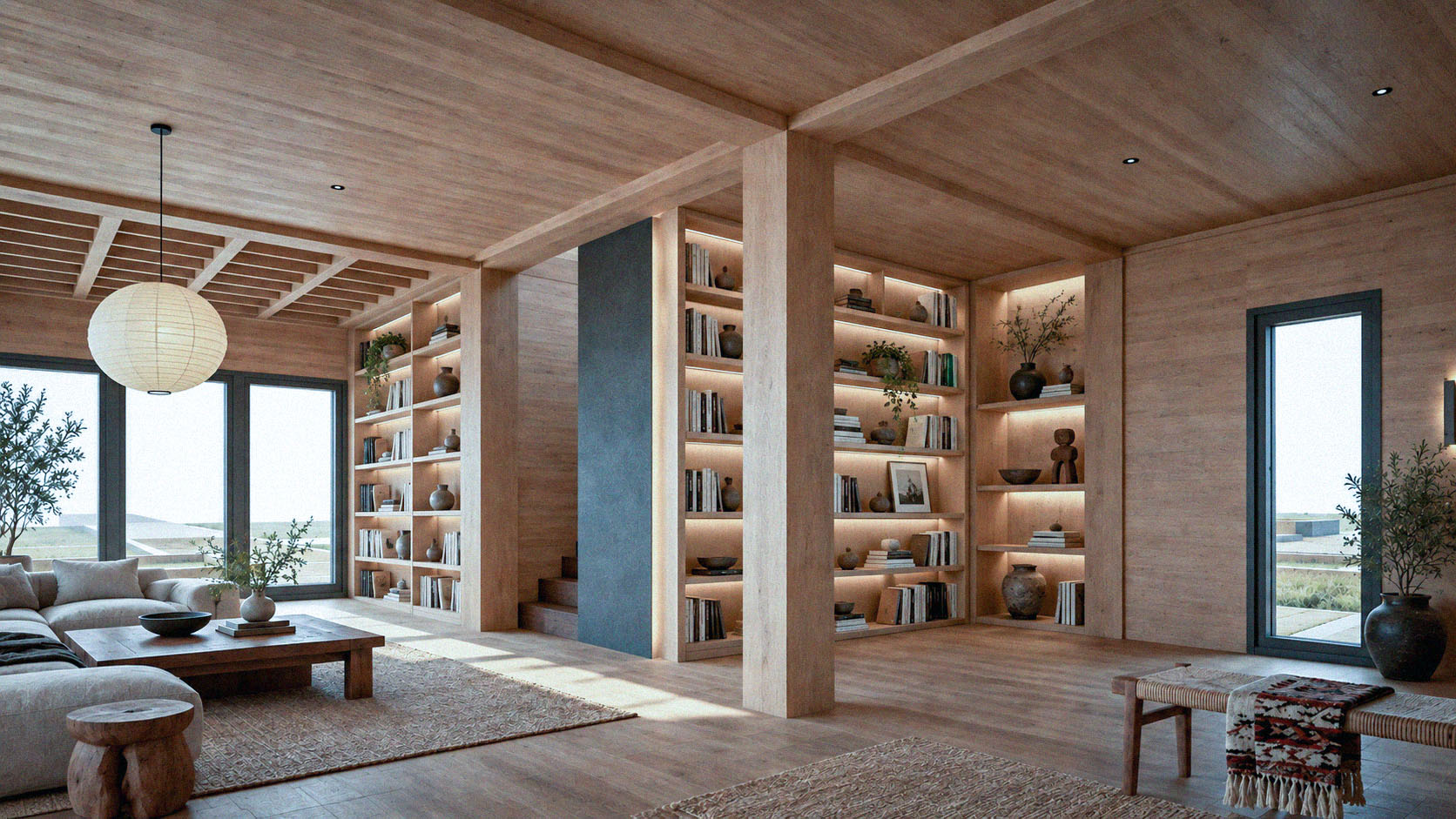
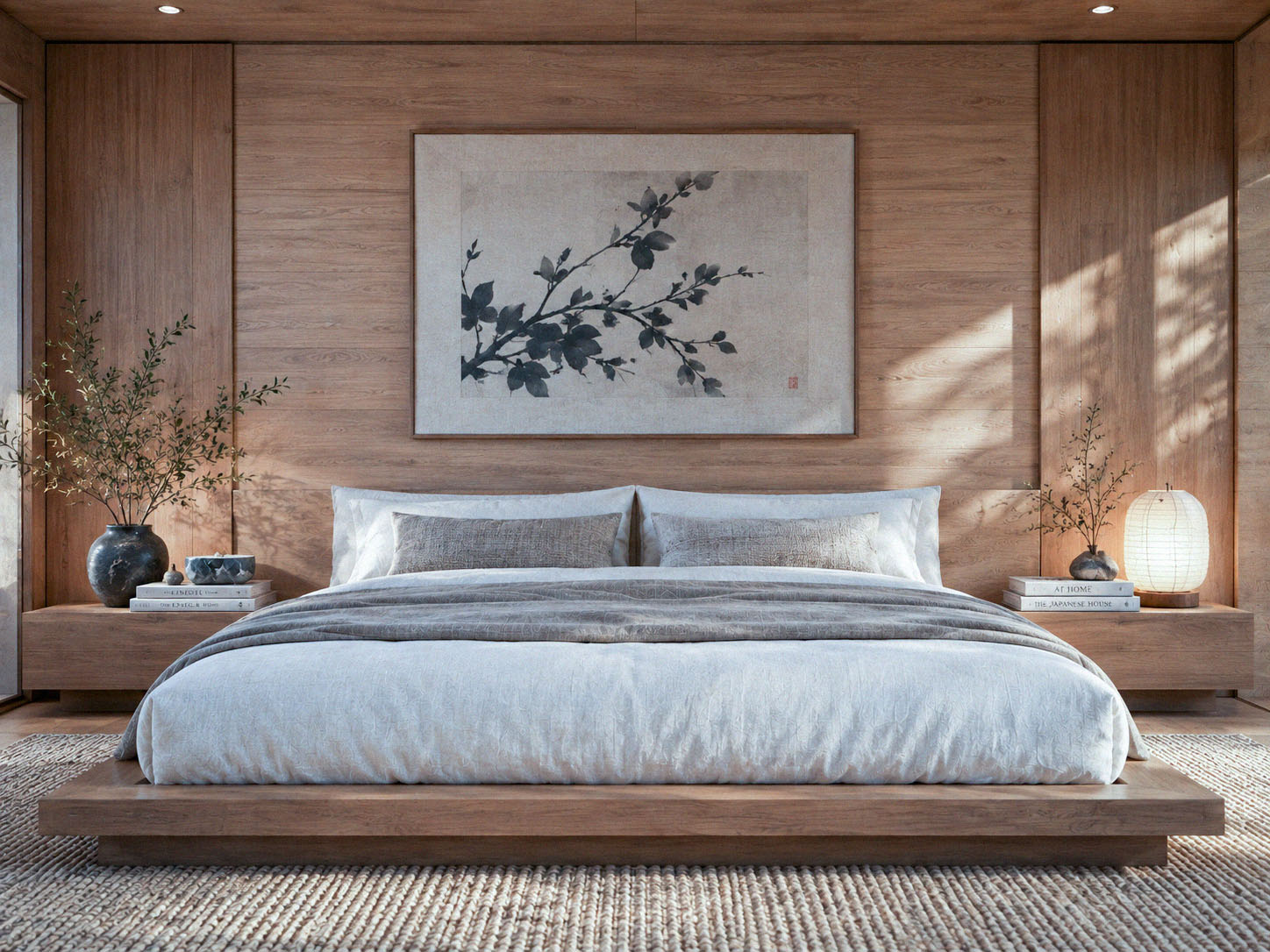
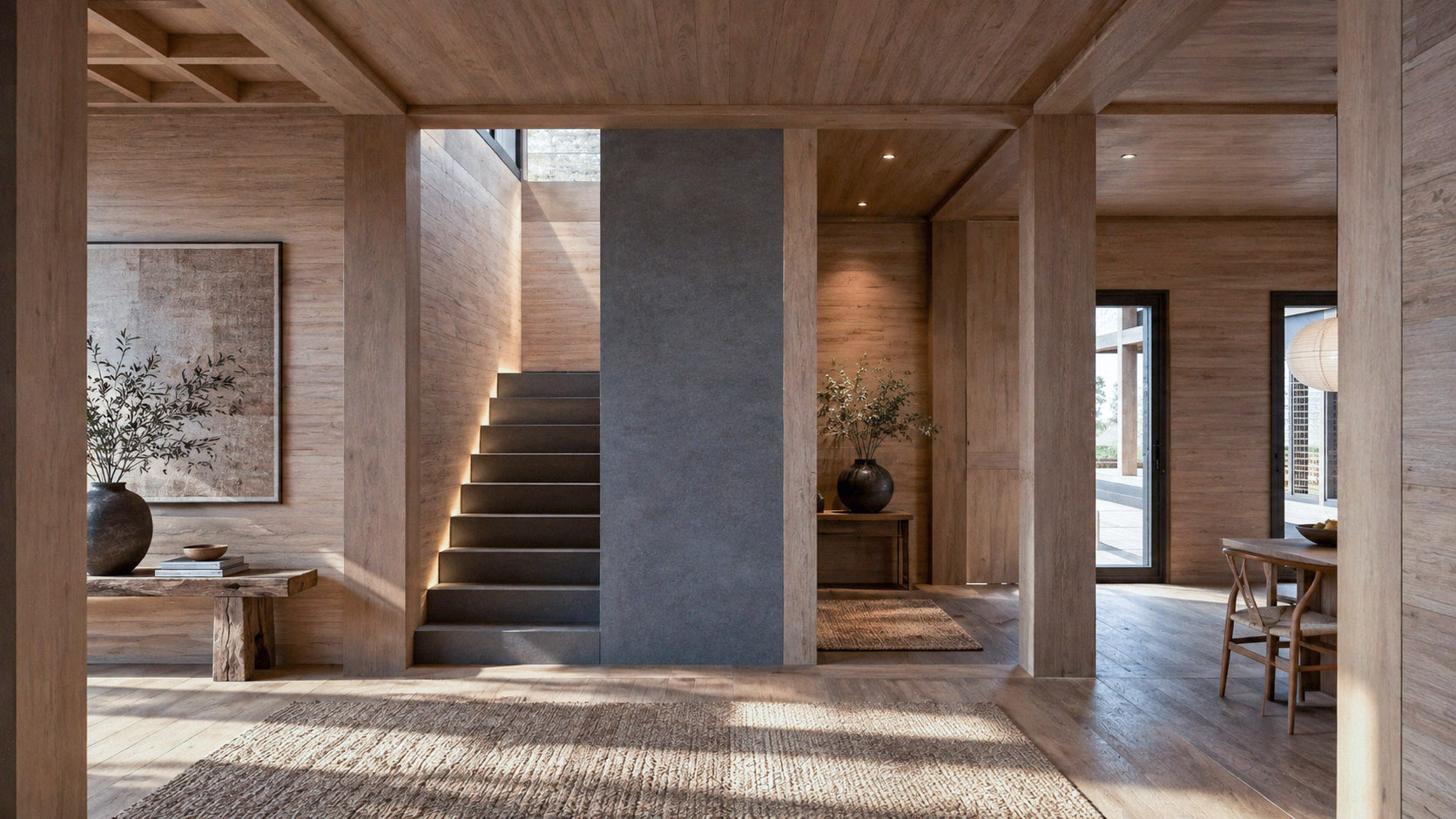
Timber is not chosen only as a warm or ecological material.
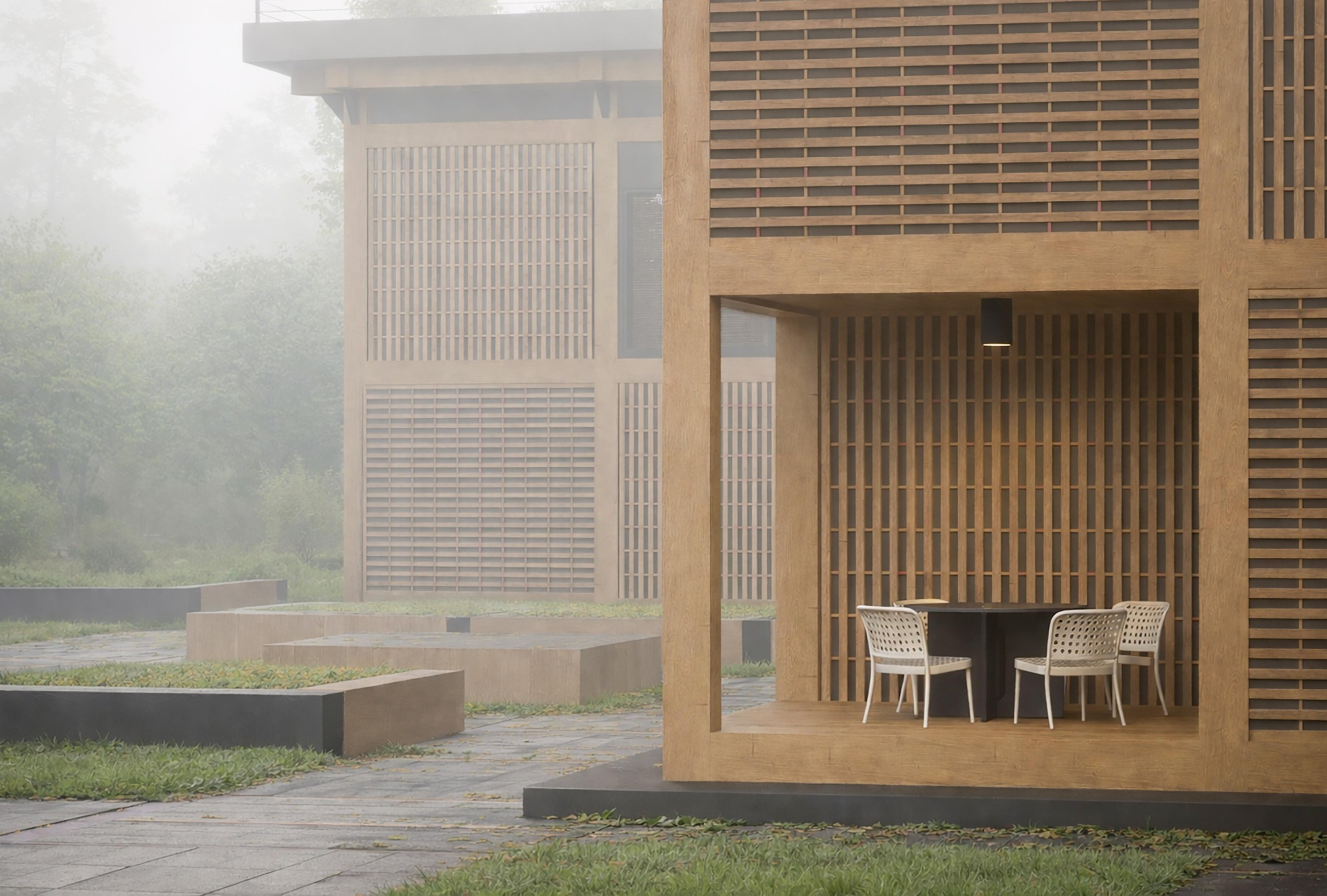
In Forest Pavilions, timber carries the symbolic structure of the tree.
The tree is one of the clearest images of duality: root and crown, hidden and visible, earth and sky, interior accumulation and exterior expression.
The root withdraws, gathers, stabilizes.
The crown expands, produces, communicates.
Between them stands the trunk — the axis, the mediator, the relation.
This is the philosophical core of the project: creation begins through duality, but duality becomes meaningful only when it is held together by relation.
Forest Pavilions translates this principle into architecture.
The house is not treated as a closed object, but as a living mediation between opposites:
inside and outside,
privacy and openness,
structure and atmosphere,
nature and geometry,
the one and the many,
the latent and the manifest.
Facade as Script
The facade system is not decoration.
It is a symbolic grammar.
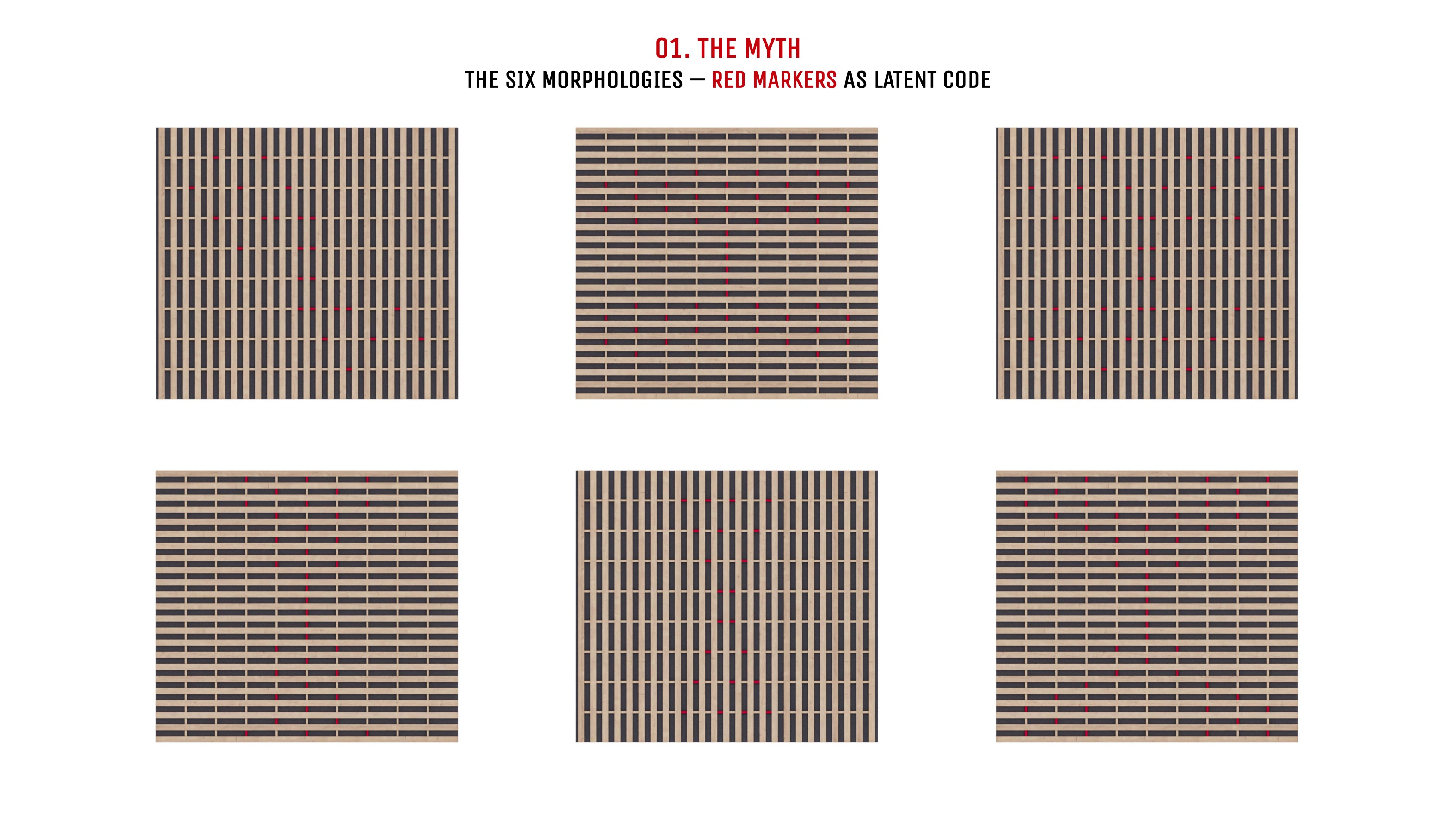
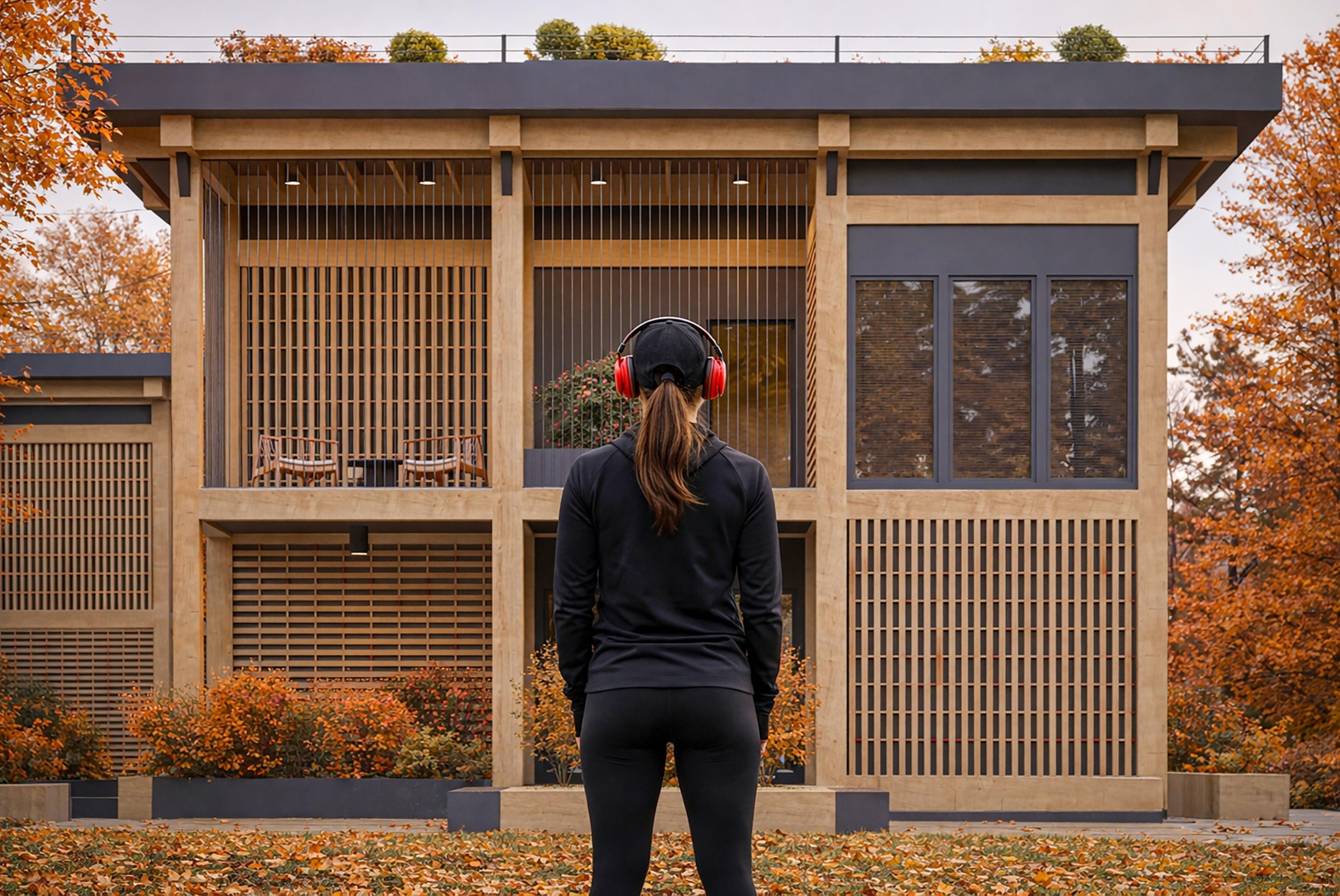
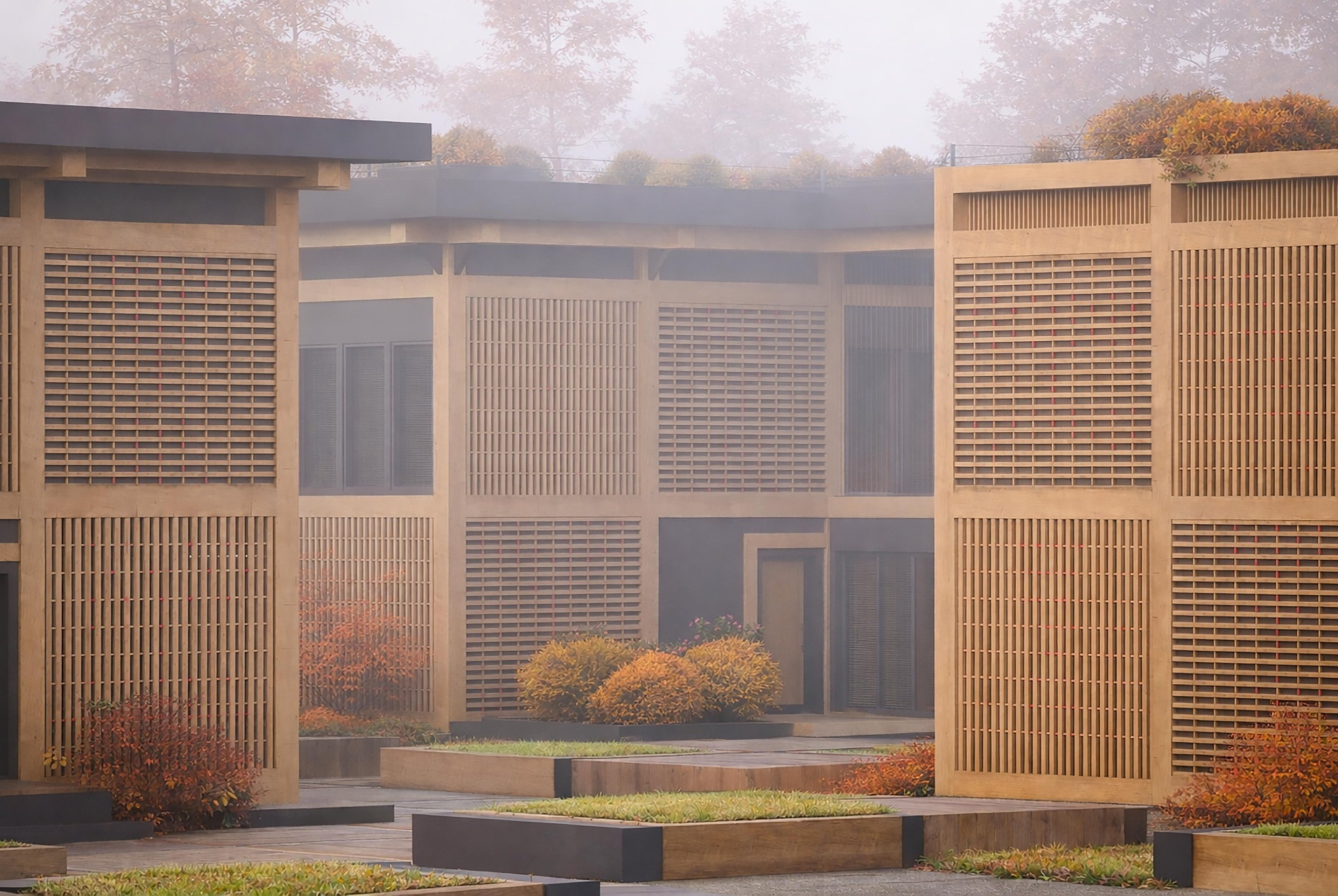
The visible timber skeleton, modular infill panels, vertical and horizontal members, and red stabilizing elements form a language of signs. These elements operate as architectural graphemes — the smallest units of meaning within the project’s visual syntax.
The red markers generate tree-like ideograms: simple, readable, almost archaic signs of growth.
They resemble diagrams, fossils, branches, roots, and pictographic traces. Their role is not ornamental, but mnemonic. They remind the inhabitant that architecture can still speak.
Each facade becomes a script.
Each panel becomes a fragment of a larger sentence.
Each house becomes a readable organism.
Six Morphologies of Growth
The Forest Pavilions system begins with six symbolic facade morphologies.
Each morphology represents a different condition of growth:
asymmetry, expansion, balance, analysis, vertical discipline, and dual integration.
Together, they form the first vocabulary of the architectural language.
One ideogram may suggest growth through imbalance.
Another may express openness toward the other.
A third may represent symmetry and stabilized identity.
Another may point toward discipline, method, and conscious work.
One may become an image of vertical ascension.
The last may hold the tension of duality: two forces, two paths, two identities, sharing one origin.
These are not arbitrary patterns.
They are symbolic diagrams of development.
House as Architectural Biography
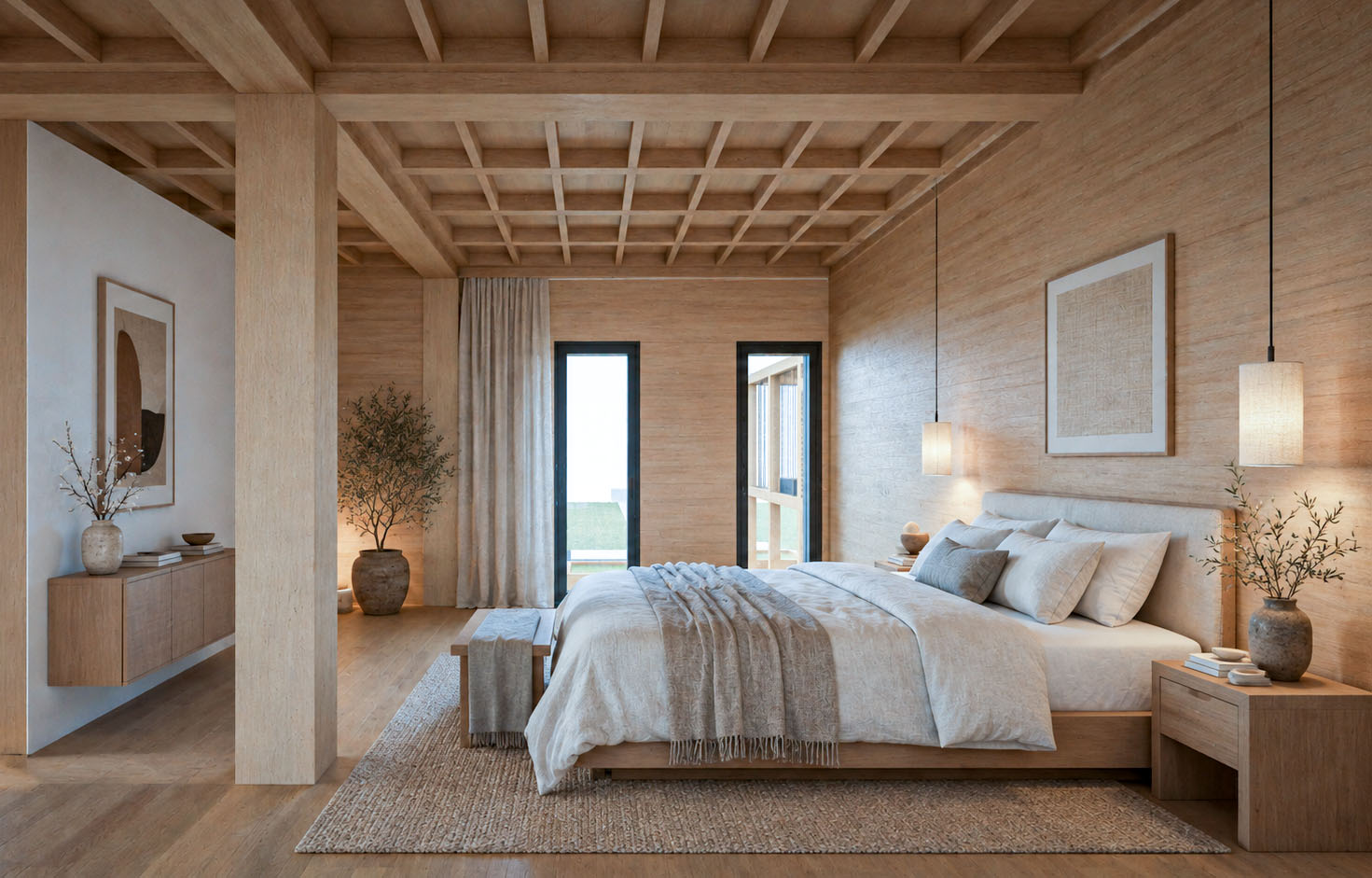
Forest Pavilions is designed as a system capable of growth.
A house can begin as one configuration and later expand through additional modules, altered facades, new spatial relations, or site-specific adaptations.
But this growth is not only quantitative.
It is not only more rooms, more area, or more value.
The growth of the house can follow the growth of the user.
Each new module may become the spatial trace of a new phase of life.
Each facade may become a diary of transformation.
Each variation may express a different relation between identity, nature, privacy, ritual, and openness.
The house becomes an architectural biography — not a frozen object, but a living symbolic structure.

Style in the Digital-Informational Age
The 3×3 grid gives Forest Pavilions a contemporary logic.
Its grammar belongs to a binary and informational age: repetition, variation, modularity, code, system, recombination.
But the project does not accept the digital age as pure abstraction.
It brings digital logic back into contact with timber, craft, landscape, ritual, and symbolic memory.
This is why the style of Forest Pavilions is not simply minimalist, modular, or contemporary.
It is a synthesis.
A binary structure softened by natural material.
A coded system animated by archetypal signs.
A contemporary villa language that remembers the forest.
A System for Villas, Estates, and Developments
The three initial houses — Radix, Arborium, and Integrum — are not the limit of the system.
They are the first grammar.
The Forest Pavilions language can be expanded through new configurations, larger villas, estate compositions, boutique retreat developments, and site-specific adaptations.
For private clients, the system offers a house with symbolic identity.
For developers, it offers something rarer than another villa model: a recognizable architectural world.
For prefab, timber, modular, and premium residential companies, it offers a design language that can be licensed, adapted, and developed into a distinctive product line.
Beyond Customization
Forest Pavilions does not treat customization as a choice between layouts, materials, colors, or facade options.
The deeper aim is personal-symbolic architecture.
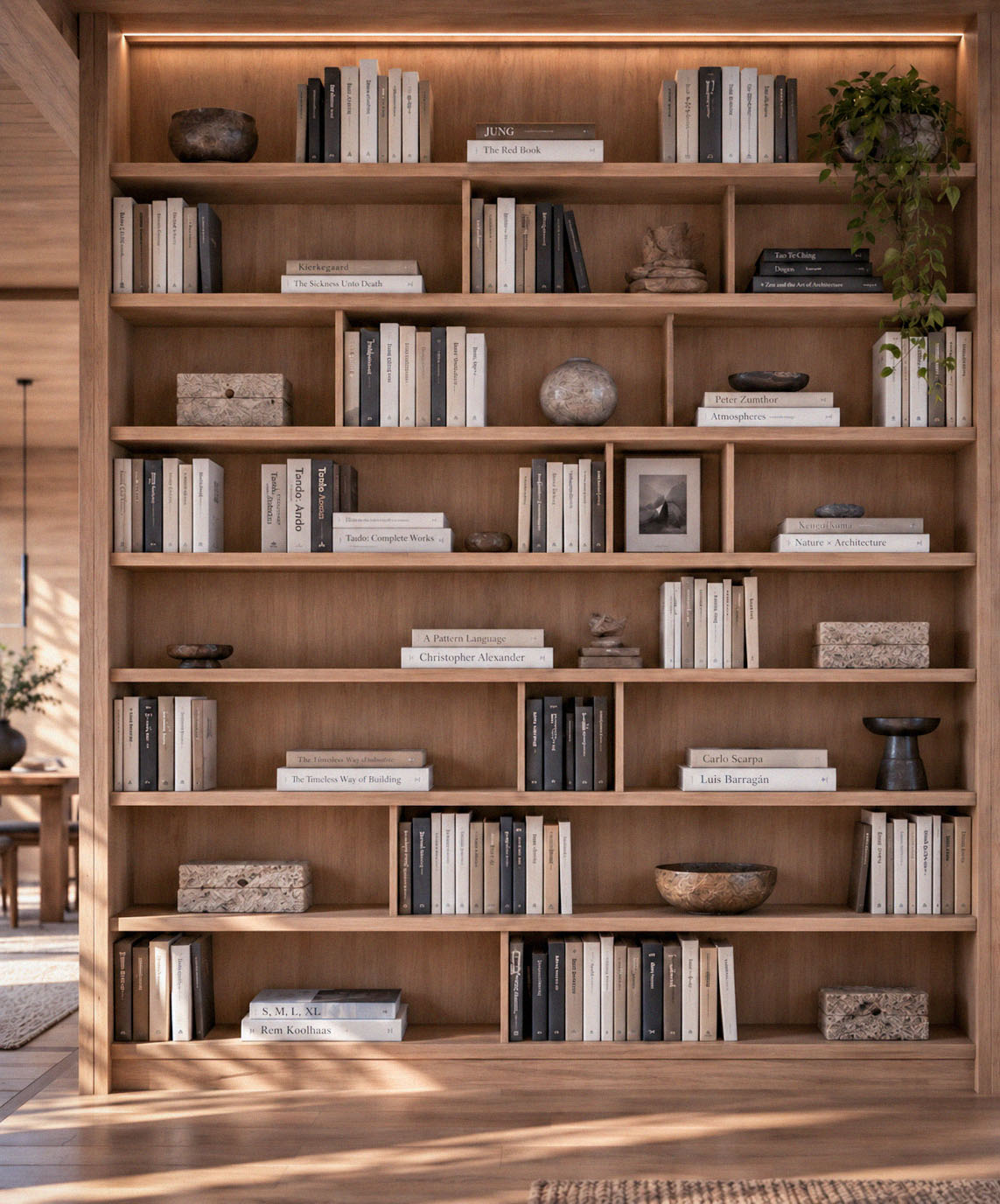
Instead of asking only how many rooms a client needs, the system asks how the client relates to beauty, nature, order, privacy, openness, ritual, growth, and identity.
These answers can be translated into:
custom facade grammars,
new ideogram lexicons,
spatial motifs,
material atmospheres,
symbolic gestures,
and coherent architectural narratives.
The result is not simply a modified house.
It is a personal architectural identity.
Project Status
Author: The Architectural Mythologems
Status: Architectural system / licensable design language
Focus: Symbolic villa design, modular grammar, timber logic, architectural identity
Base Logic: 3×3 meter grid
Initial Typologies: Radix, Arborium, Integrum
Use: Architectural study, licensing basis, bespoke development, high-end villa customization
Forest Pavilions is an architectural study and conceptual design system.
The study does not grant the right to construct, reproduce, or commercially develop the system. Any construction, adaptation, development, or commercial use requires a separate written license issued by The Architectural Mythologems.
Closing Statement
Forest Pavilions is not only a house system.
It is a proposition that architecture can still carry meaning.
That a house can be more than function.
That timber can be more than material.
That a facade can be more than image.
That style can become the expression of an age.
And that a home, when treated as a principle, can become a visible form of inner development.
→ View the complete Forest Pavilions system
